Exotic Avian Portraiture
PHOTOGRAPHING BIRDS
Photographing exotic birds in a studio setting eliminates environmental unpredictability, allowing complete control over lighting, composition, and fine feather detail. Whether capturing the vivid iridescent plumage of a macaw or the delicate crest of a cockatoo, a controlled portrait setup turns avian photography into fine art.
Capturing Bird Portraits in the Studio
- Pre-Set the Studio Space: Dial in camera settings and light positions before bringing the bird into the room. Allow the bird and its handler time to acclimate quietly to the environment.
- Lock Animal-Eye AF & Maintain Fast Shutter: Enable Animal/Bird Eye Auto-Focus. Keep shutter speeds at 1/250s minimum for stationary perching, and push to 1/1000s+ to freeze subtle head twitches or wing fanning.
- Sculpt Soft Directional Lighting: Place a key softbox 45 degrees off-axis slightly above eye level. Position a reflector opposite to fill shadow areas, creating distinct catchlights in the eye without harsh contrast.
- Shoot Continuous Bursts: Rely on high-speed burst shooting. Birds adjust their posture rapidly; burst captures ensure you hit the exact micro-moment when head angle and feather arrangement align.
Recommendations for Safety & Success
- Avoid Unmodified Flash: Direct, sudden flash bursts can startle exotic species. Always diffuse strobes through thick diffusion fabrics or opt for dimmable continuous LED units.
- Control the Environment: Keep the studio warm, quiet, and free of drafts. Secure all doors and cover reflective mirrors or glass windows.
- Defer to Professional Handlers: Work closely with a certified handler who can direct the bird's attention using subtle vocal cues or food rewards without placing stress on the animal.
Studio Lighting for Exotic Birds
Photographing exotic birds in a studio presents unique challenges and rewards. While the principles of portrait lighting apply, adjusting the scale and intensity for an animal is critical. The following diagrams and placement guides offer optimized setups for small versus large bird species, prioritizing the bird's comfort and feather detail.
Studio Lighting for All Birds
- Prioritize Continuous Light: As mentioned in the main article, direct, loud strobe flashes can terrify a bird. Use dimmable continuous LED lights. If you must use strobes, employ high-speed sync (HSS) and massive diffusion at very low power.
- Feather Texture is Everything: Avoid hard, direct light. Use large modifiers like octaboxes or large rectangular softboxes to create wrapping, soft light that highlights the subtle micro-textures of feathers.
- Maintain Separation: Use a separate background light (as shown in the diagram) and significant distance to ensure the background falls to a pleasing, distinct bokeh.
- Angle for Polish: Lighting from slightly above (mimicking natural light) is crucial. Place the key light roughly 45 degrees off-axis to the side and angled down towards the bird's head and body.
Setup for Small Exotic Birds (e.g., Finches, Lovebirds)
Small birds are delicate and move with rapid, unpredictable twitches. Your lighting needs to maximize brightness for fast shutter speeds without overwhelming the animal.
Key Modifier: A small to medium (e.g., 24–36 inch) softbox or octabox is effective.
| Equipment | Recommendation | Purpose |
|---|---|---|
| Camera Body | Fast Eye-AF mirrorless (e.g., Sony Alpha, Canon EOS R, Nikon Z) | Locks focus immediately on bird eye tracking. |
| Lens | 70-200mm f/2.8 zoom or 85mm f1.4 prime | Maintains a comfortabe distance while delivering razor-sharp feather detail. |
| Lighting | Continuous LEDs or High-Speed Sync (HSS) strobes | Continuous LED light is gentle and prevents startling skittish birds. |
| Modifiers | Large softboxes or octaboxes | Yields soft wrapping light that accentuates subtle feather textures. |
| Perch | Natural driftwood or textured branches | Provides a secure grip for the bird and adds organic visual contrast. |
Placement:
- Place the Key Light closer to the perch—approximately 2 to 3 feet away. Small birds can tolerate closer equipment, and the closer placement makes a standard small modifier relatively large, increasing softness.
- Use a close fill card or very dim fill light on the opposite side (at a wider angle) to reduce deep shadows under the beak and tail.
- A telephoto macro lens (e.g., 105mm) allows you to work from a respectful distance while filling the frame with a tiny subject.
Setup for Large Exotic Birds (e.g., Macaws, Cockatoos)
Large birds occupy significant visual space, demanding substantial light coverage and consideration for their wing spans.
Key Modifier: You must use large modifiers (e.g., 48+ inch octaboxes or substantial strip boxes) to illuminate the entire body and wings evenly.
Placement:
- Shift all lights further back. The Key Light should be positioned approximately 5 to 7 feet from the perch. This prevents fall-off across the bird's large body and ensures a bigger, more imposing catchlight in the eye.
- Use a robust natural wood perch that can support the bird’s weight and size.
- A telephoto zoom (e.g., 70–200mm) is ideal for capturing full-body or detailed portraits without crowding the large bird.
- Employ a dedicated, brighter background light to separate the bird's outline from the distant backdrop.
🖼️ BIRD PORTRAIT EVENT PHOTO GALLERY
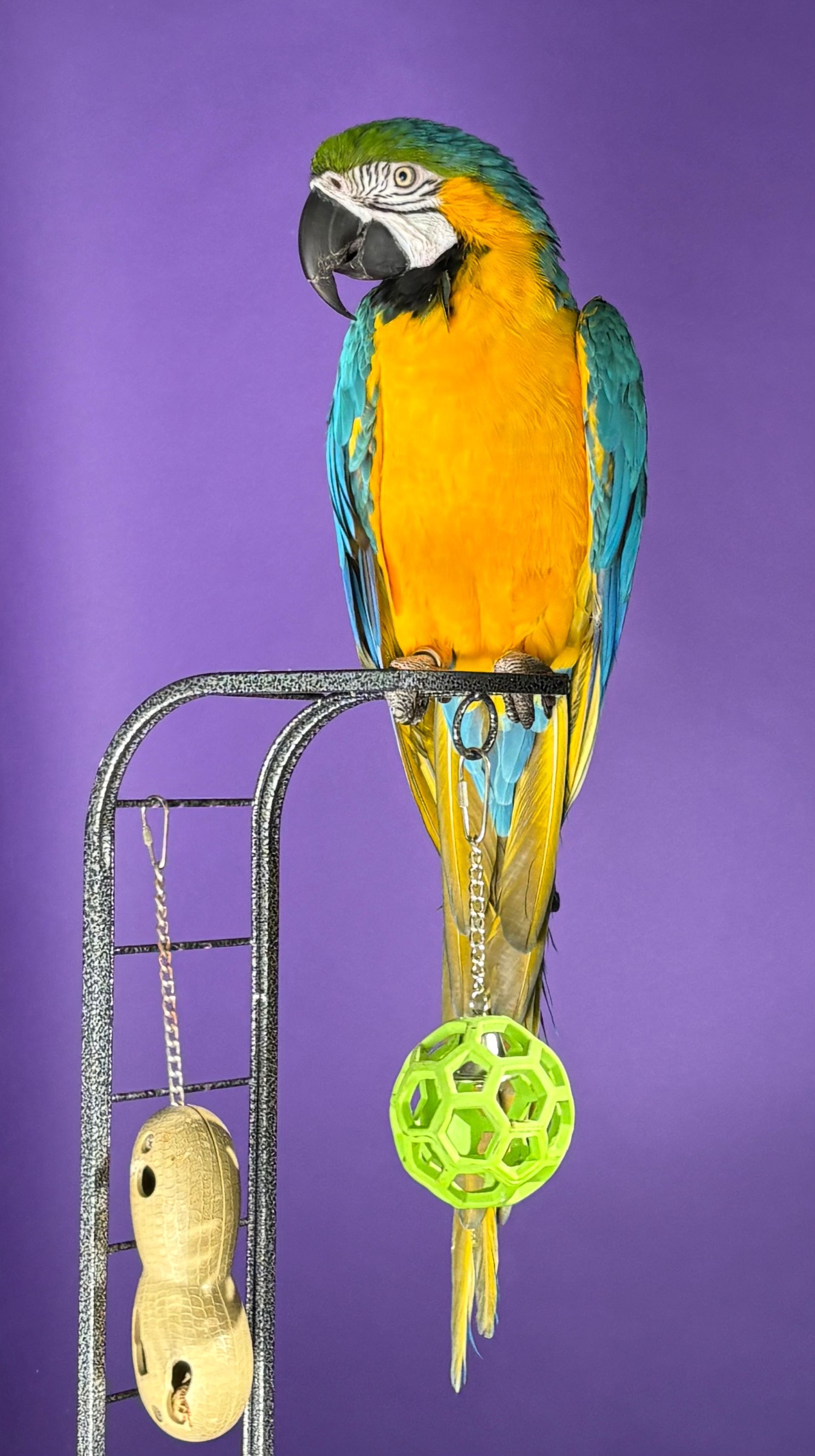
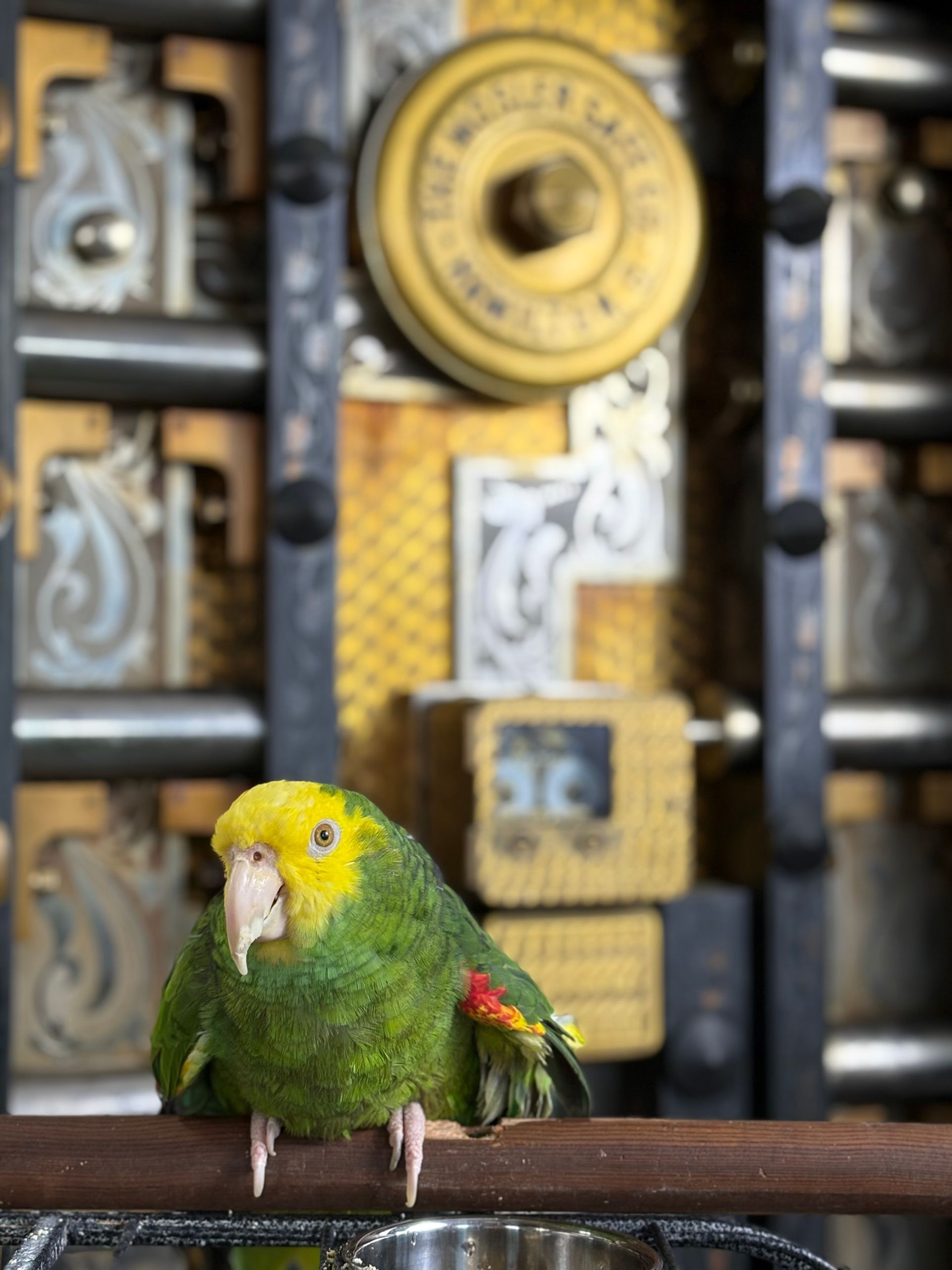
Milford Photo transformed into an avian portrait studio for our Exotic Avian Portraiture event - an exclusive evening where our community captured magnificent birds and added truly unique images to their portfolios! 📸: Emily Pelella


photos by Emily Pelella